Anywhere Packing lists
Road trip packing list: personal bags and shared essentials
The most useful road trip bag is the one you can find at the right moment. Keep overnight clothes separate from the things you need at a stop, and give shared supplies an owner before departure. This list uses a five-day, four-night trip for two adults staying in hotels, with adjustments for children, longer routes and different weather.
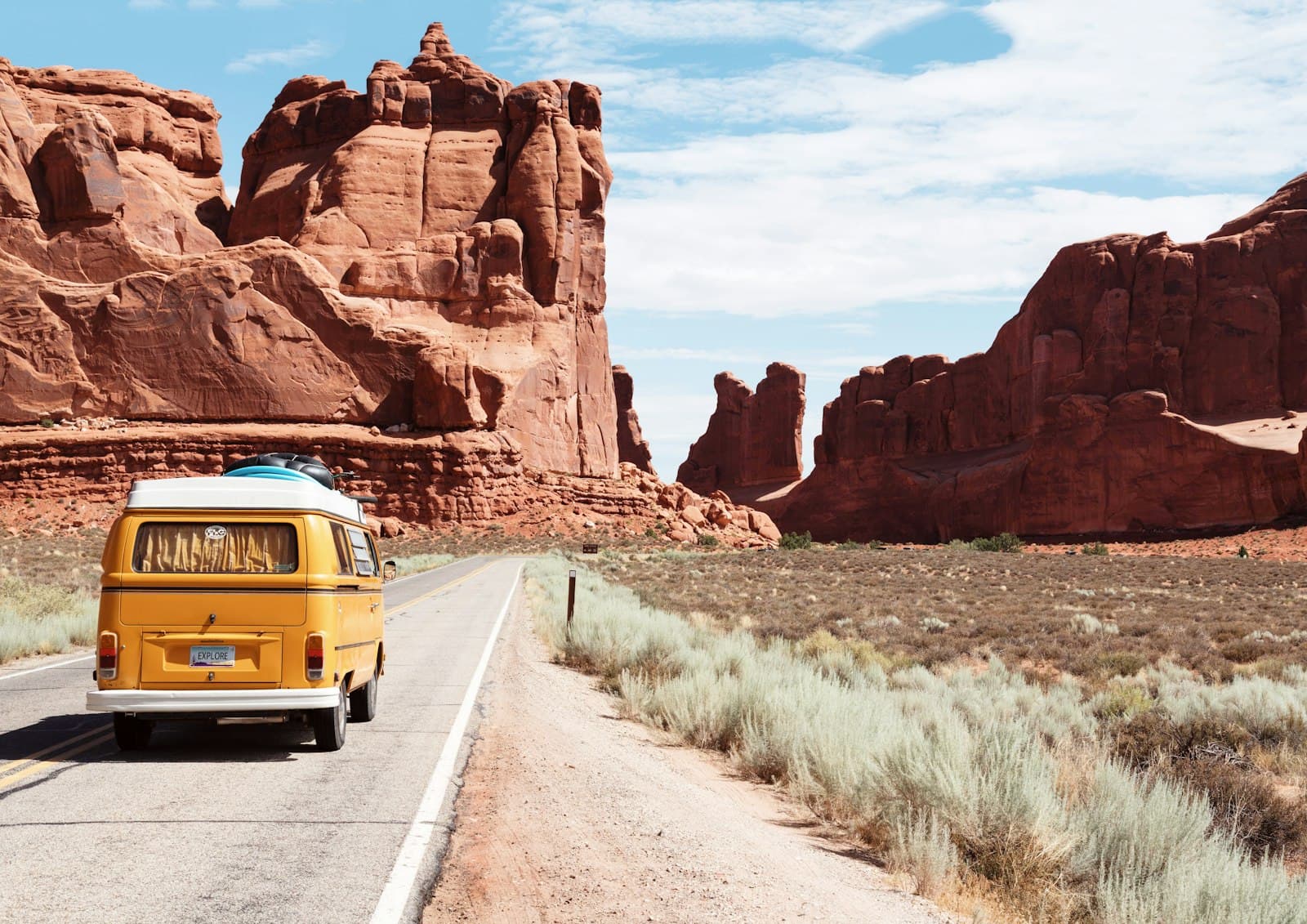
Photo: Dino Reichmuth · Unsplash License · Cropped for layout.
- Example trip
- Five days; four hotel nights
- Travelers
- Two adults sharing a car
- Bag plan
- Personal bags + shared supplies
- Laundry
- None in this example
In this guide
The short version
Pack for the people, the car and each day’s stops
Give each traveler an overnight bag with five days of clothing and personal essentials. Add one shared car kit for charging, navigation, cleanup and vehicle essentials, plus a small bag for the next stop. Check the vehicle, route, weather and roadside assistance arrangements before loading. Camping, remote routes and winter driving need additional preparation.
Give everything a place before loading the car
Start with the overnight stops and the activities between them. A city hotel, a beach afternoon and a walk in a national park each need different things within reach. List those stops first; a large boot or trunk is not a reason to bring equipment you will never use.
Swipe or scroll to see all columns.
| Bag or kit | What belongs here | When to use it |
|---|---|---|
| One overnight bag per person | Clothing, wash kit, sleepwear and personal care items | Take it into each accommodation. |
| One small shared stop bag | The next activity’s tickets, layers and small essentials | Repack it at the start of each day. |
| One shared supplies kit | Compatible chargers, cleanup supplies and other agreed items | Keep its location known to both travelers. |
| Vehicle equipment | The car’s required equipment and an appropriate emergency kit | Store it securely and keep it accessible when parked. |
Pack heavy items low, secure the load and keep the driver’s view, controls and footwell clear. Follow the vehicle’s loading limits and instructions. Access stored items while safely parked; a passenger can manage directions and the next stop without distracting the driver.
Pack five days of personal essentials
This mild-weather example counts worn and packed clothing together, assumes no laundry and allows rewearing bottoms. Add fresh outfits for sweaty activities or change the quantities to suit your needs. Each traveler should check their own documents, medicines and daily care supplies.
Keep a small list of items still being used on departure morning. For a shorter journey, the two-night weekend packing list gives a smaller clothing plan. For a longer trip, decide where laundry actually fits before reducing the number of clean essentials.
Check the car before the bags go in
The NHTSA road trip checklist covers tires, lights, wipers, fluids and the vehicle battery. Use the manufacturer’s tire-pressure guidance on the vehicle placard or in its manual, rather than the tire sidewall’s maximum. Have concerns assessed before departure.
Check the vehicle’s emergency equipment and roadside assistance contact. NHTSA recommends supplies including a phone and charger, first-aid kit and flashlight. Match additional equipment to the vehicle and route, and follow the manual or assistance provider’s instructions.
For a rental, confirm driver eligibility, permitted travel areas, documentation and help arrangements with the rental company. For an electric vehicle, plan charging stops around the actual car, connector and current operator information; keep a workable alternative. These checks belong on the departure list even though they do not go in a suitcase.
Pack the day around the route, not the mileage target
Build in breaks, meals, fuel or charging and time to reach accommodation. Check weather, road conditions and closures before setting out. Keep directions available if connectivity drops, and share your route and expected arrival with someone you trust. NHTSA’s trip-planning guidance has a useful departure review.
For U.S. national parks, check the individual park’s current conditions and reservation requirements. A park pass may not cover a separate timed-entry reservation. The National Park Service travel tips point you to each park’s planning information; do the check before driving to the entrance.
Swipe or scroll to see all columns.
| Today’s plan | What to review |
|---|---|
| Mostly driving and a hotel arrival | Charging cable, directions, booking details and the first overnight bag. |
| Town or museum stop | Tickets, payment, suitable layer and the venue’s bag policy. |
| Beach or picnic | Swimwear or seating if needed, towels if not supplied and a way to separate damp items. |
| A walk or park visit | A separate activity checklist matched to terrain, conditions and duration. |
| Travel with children | Suitable child restraints, personal care supplies, spare clothing and reachable activities, adapted to each child. |
If the plan changes, remove yesterday’s extras before adding today’s. That keeps the stop bag useful and leaves each person’s main bag organized for the evening.
Use one final departure check
Use the packing list generator for a personal starting list, then add the car-specific tasks and shared supplies from this guide. For decisions about costs, dates and responsibilities, see the group trip planning guide.
From reading to ready
Know who is bringing what before you leave
Keep each traveler’s personal list in Oreviyo and assign shared items to the person bringing them. Add your overnight stops and reservation notes to the trip so the packing plan follows the journey.
Explore shared packing lists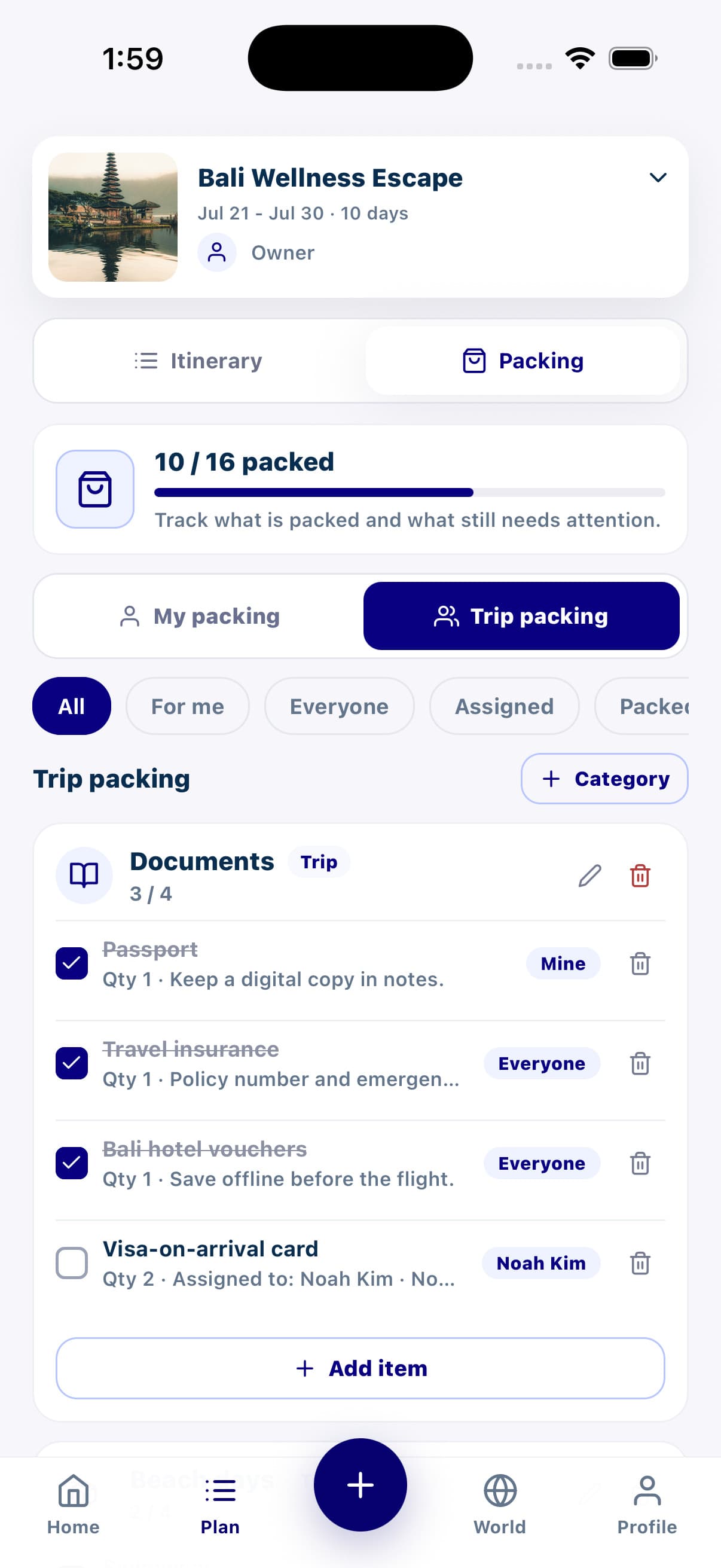
Common questions
What should I pack for a five-day road trip?
What should stay easy to reach in the car?
Should each traveler bring the same shared supplies?
Does this list cover a camping road trip?
How do I adapt it for a family?
Sources and useful links
Researched by Oreviyo using the sources below, reviewed on September 15, 2026. The routes, quantities, and packing examples are our suggestions. Confirm current conditions, access, and booking details before you go.
- Summer driving and road trip preparationU.S. National Highway Traffic Safety Administration
- Travel tips and individual park planningU.S. National Park Service