Anywhere Packing lists
Beach packing list: a lighter bag for a better day
A good beach bag makes the walk from the car, station or accommodation feel easy. Start with the things each person needs, add the few items you can share, and leave space for wet clothes on the way home. This list covers one beach day, with a four-person example and simple changes for a longer beach holiday.

Photo: Adrian Diaz-Sieckel · Unsplash License · Cropped for layout.
- Use it for
- One day at the beach
- Quantity example
- 4 people; shared supplies
- Pack in
- Personal pouches + shared bag
- Before leaving
- Check conditions and facilities
In this guide
The short version
Pack a dry change, sun protection and a clear plan for shared items
For each person, start with swimwear if needed, a towel, suitable footwear, a dry change, a hat, sunglasses, sunscreen and drinking water. Add personal essentials and a bag for wet items. Share bulky items only after confirming who brings them, and check the beach’s weather, water conditions, access and facilities before setting off.
Check the beach before deciding what to carry
Look up the exact access point, the walk from transport, opening hours and any local restrictions. Find out whether toilets, changing areas, drinking water, food and shade are available. A short visit beside your accommodation needs a different bag from a full day with a long walk back.
Swipe or scroll to see all columns.
| Check | Packing decision |
|---|---|
| Distance from transport | Bring only what the group can carry comfortably, including on the return walk. |
| Facilities and rentals | Confirm towels, shade, chairs and water availability rather than assuming they are provided. |
| Forecast and local notices | Review heat, wind, rain, tides, water conditions and any closures for the actual beach. |
| The rest of the day | Keep a dry outfit and suitable shoes accessible if you are using transport or eating out afterward. |
The National Weather Service’s beach guidance recommends speaking with the lifeguard or beach patrol about current water conditions. A sunny view does not establish that swimming is suitable. Follow local advice and restrictions; the bag does not determine whether to enter the water.
Give each person a small set of personal essentials
Lay out one person’s kit first. Then repeat it for the people coming, adjusting for their own needs. If you are wearing your swimwear or hat on the way, count it once and add the dry clothes you want afterward.
Keep clothing comfortable for the journey home. A loose cover-up can help between the water and changing area, but it may not be the outfit you want for a longer train ride. Put the dry change inside its own pouch so it stays separate from a damp towel.
Keep sun protection and local water advice easy to act on
Put sun-care items where you can reach them rather than under the picnic. The FDA’s sun-safety guidance combines sunscreen used as directed with shade, covering clothing, a hat and sunglasses. It also explains that no sunscreen is waterproof. Read the product’s reapplication instructions, including after swimming or sweating.
Check what shade is actually available and suitable for the conditions. If bringing an umbrella or shelter, follow its setup instructions and the beach’s rules; change the plan if conditions make it unsuitable. Do not assume the umbrella in a destination photo represents equipment provided at your beach.
If children are coming, agree who is supervising and make handovers explicit. Keep phones and games from distracting the responsible adult. Follow lifeguard instructions and local water-safety advice. Inflatable toys are play items and should not be treated as a substitute for appropriate supervision or safety equipment.
A shoreline walk or a visit without swimming can still be the day’s plan. If local advice or conditions rule out the activity you expected, choose something suitable rather than trying to make the packed equipment justify it.
Pack for the wet, sandy journey home
Use three simple zones: dry clothing, items used during the visit, and wet or sandy things on the return. A pouch for keys and payment methods helps you find them without emptying the whole bag. Avoid bringing valuables you will have no practical way to look after.
Keep food and personal care items separate from wet swimwear. Check care labels before sealing damp items away for long periods, and unpack them when you get back. Shake out or clean equipment where permitted, then leave the beach with all the items and waste you brought.
Turn the day bag into a beach-holiday plan
For several nights away, keep this day bag as one part of a larger packing list. Add daily clothing, sleepwear, toiletries, documents and chargers for the whole journey. Two swimsuits can be useful for rotation, but check drying and laundry access before relying on rewearing anything.
Do not multiply shared equipment by every day of the holiday. Four towels for four people can remain four if you have confirmed washing or replacement arrangements; sunscreen and food are consumables that need a separate supply check.
Use the weekend list for two nights, the family list for a five-day example with children, or the cruise list for port-day planning. The free packing tool can build a starting list with beach activities selected; review personal and shared quantities before using it.
From reading to ready
Make the shared bag someone’s responsibility
Build personal and shared packing lists in Oreviyo, assign shared items to a travel companion, and keep the day’s plans with the rest of your trip.
Explore shared packing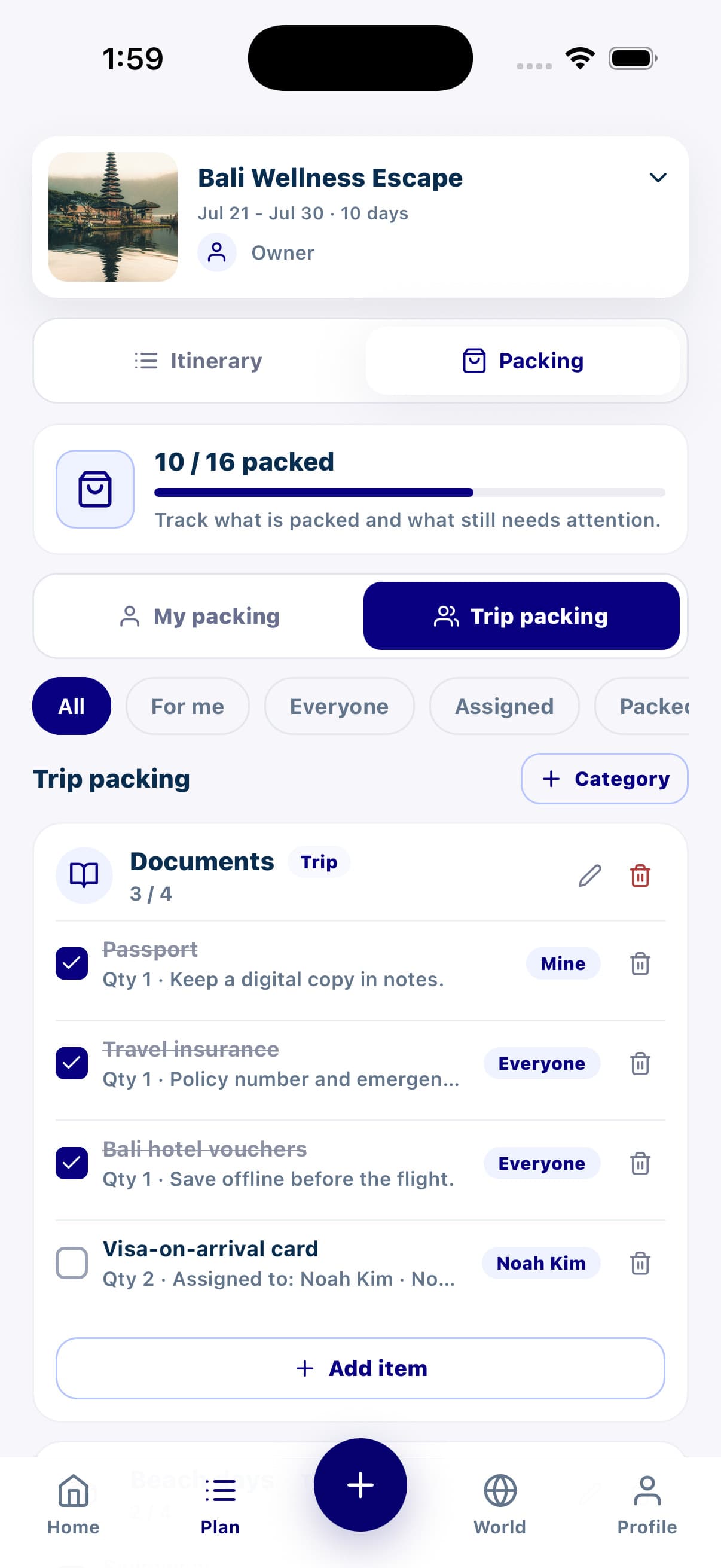
Common questions
What are the essentials for a beach day?
How many towels do four people need?
What should a family bring to the beach?
Should I bring a beach umbrella?
What changes for a beach vacation?
Sources and useful links
Researched by Oreviyo using the sources below, reviewed on October 31, 2026. The routes, quantities, and packing examples are our suggestions. Confirm current conditions, access, and booking details before you go.
- Sun safety, sunscreen and sunglassesU.S. Food and Drug Administration
- Checking conditions at the beachU.S. National Weather Service