Anywhere Packing lists
Family packing list: five days with less guesswork
Family packing is easier when every item has a person, a quantity and a place in the bags. This five-day example is for two adults and two school-age children, without laundry. It keeps spare clothes and familiar comfort items close on travel days, while shared supplies appear once on a list everyone can follow.
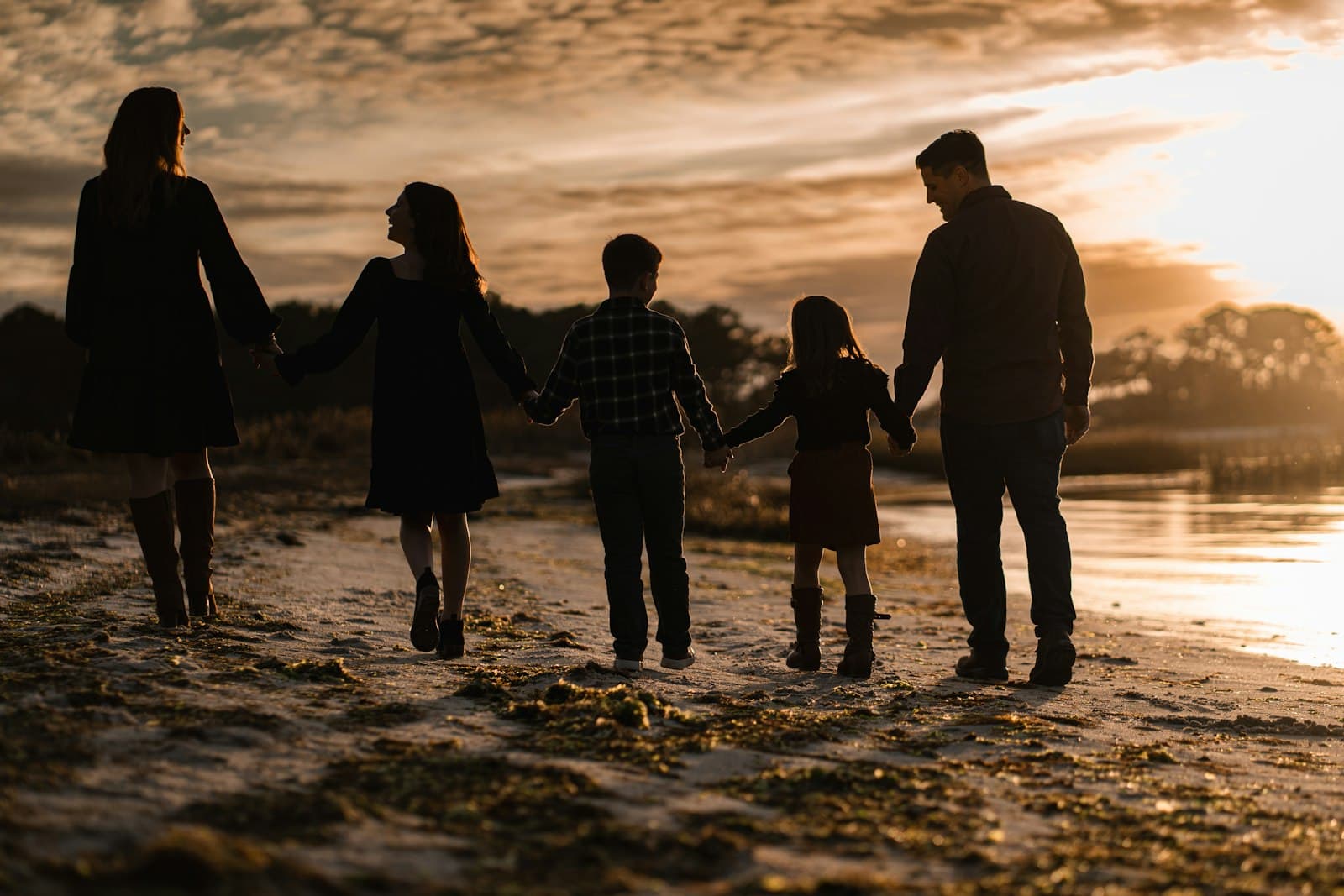
Photo: Chris Hardy · Unsplash License · Cropped for layout.
- Example family
- 2 adults + 2 school-age children
- Trip length
- 5 days · 4 nights
- Laundry
- None in the example
- Counting rule
- Worn and packed together
In this guide
The short version
Count personal clothes first, then add shared supplies once
For five days, this example gives each adult five tops, two bottoms and five daily sets of underwear and socks. Each child starts with seven tops, three bottoms and seven sets of underwear and socks, including two spare daily sets. Add sleepwear, layers and footwear for the forecast. All totals include the travel outfit; put one of each child’s spare changes in the accessible travel-day bag.
Write one personal list per traveler and one shared list
Start with the days, weather and activities, then put each traveler’s name beside their personal items. Adults can review their own lists; children can help choose familiar clothes and a small activity set, with an adult doing the final check. Separate what is already packed from what still needs washing or is being used at home.
Swipe or scroll to see all columns.
| List | What goes on it | Who confirms it |
|---|---|---|
| Personal clothing | Each person’s sizes, quantities, shoes and layers | That traveler and the adult helping them. |
| Shared supplies | Suitable toiletries, selected charging equipment and shared activity items | One named owner per item. |
| Travel-day bag | Items needed before the main luggage is available | The adult carrying it checks access and weight. |
| Preparation tasks | Documents, transport equipment, accommodation and arrival details | The person responsible confirms completion. |
Do not confuse a shared list with one suitcase. The same personal list can be divided across bags. Keep the number of bags within your booked allowance and what the adults can comfortably manage while helping the children.
Use five-day quantities with deliberate children’s spares
These are starting quantities for everyday sightseeing, not a rule for every family. The example assumes clean next-to-skin clothing daily, rewearing bottoms, and no wash during the trip. Children’s extra sets allow for two clothing changes beyond the five-day base. Adjust for personal needs, weather and how quickly clothes usually get dirty.
Swipe or scroll to see all columns.
| Item | Each adult | Each child | Family total |
|---|---|---|---|
| Tops | 5 | 7 | 24 |
| Bottoms | 2 | 3 | 10 |
| Underwear | 5 daily sets | 7 daily sets | 24 sets |
| Socks, if worn daily | 5 pairs | 7 pairs | 24 pairs |
| Sleepwear | Usual 4-night rotation | Usual rotation, plus a spare if needed | Review individually |
| Layers and weather protection | For the forecast | For the forecast | One personal check each |
| Footwear | For planned activities | For planned activities | Check fit and comfort before travel |
The totals include the outfit worn on departure day. For tops, that means each adult wears one and packs four; each child wears one and packs six. If a child’s spare top goes in the travel-day bag, it still belongs to their seven, rather than being an eighth uncounted item.
For colder trips, use the winter layering guide. For a shorter stay, start with the two-night weekend list and keep children’s spares as a separate decision.
Make one change of clothes easy to reach
Walk through the journey from home to the accommodation. Pack for the periods when the main luggage will be in a car boot, handed over or difficult to open. Keep personal medicines and documents with the responsible adult rather than in a bag a child might set down.
Let children choose a manageable activity set instead of bringing the whole collection. Check headphones, account access and any downloaded content before leaving. Keep a non-device option if that suits your family, and put the comfort item somewhere it can be found without opening every bag.
For flights, verify current security rules and the airline’s allowances for your route, including any food, liquids or equipment. This guide does not set a universal allowance for children’s bags.
Adjust for age, transport and confirmed accommodation supplies
The clothing example is for school-age children. Babies and toddlers need their own routine-based list: feeding supplies, changing items, clothing changes and any equipment used at home. Estimate consumables from your normal daily use, trip length, a chosen reserve and reliable access to replacements; do not assume the destination stocks the same product.
Ask the accommodation to confirm requested equipment and what is actually provided. Check hire arrangements before relying on them, and add anything your family needs that has not been confirmed. Give large items a transport plan as well as a checkbox.
For U.S. air-travel guidance, the FAA’s family travel page explains approved child restraint systems and checking the device’s labeling, fit and manufacturer instructions. Review your airline’s requirements and the applicable authorities’ guidance for your route. Plan appropriate road transport arrangements separately for airport transfers and any driving at the destination.
Check required documents for each traveler, including children, through the relevant authorities. The U.S. Department of State’s checklist is a starting point for U.S. international travelers; other nationalities and routes have their own requirements. Keep document preparation on the travel task checklist rather than leaving it until the bags are closed.
Check the first day, then the whole trip
Set out each person’s travel outfit and check it against their clothing total. Pack personal clothes in a way that makes the owner clear, such as a labeled pouch or a defined part of a bag. If your family uses several bags, consider spreading basic clothing across them while keeping the travel-day essentials accessible.
Leave a short morning list for the items still in use. Before each move, check the same places for small belongings: beds, drawers, bathroom hooks and charging points. Familiar routines make the return journey easier to pack for, too.
From reading to ready
Give the family one plan to check together
Keep the itinerary and reservation notes in Oreviyo, build personal packing lists, and assign shared items to a travel companion. Review the children’s supplies with the adult responsible for packing them.
Explore shared trip planning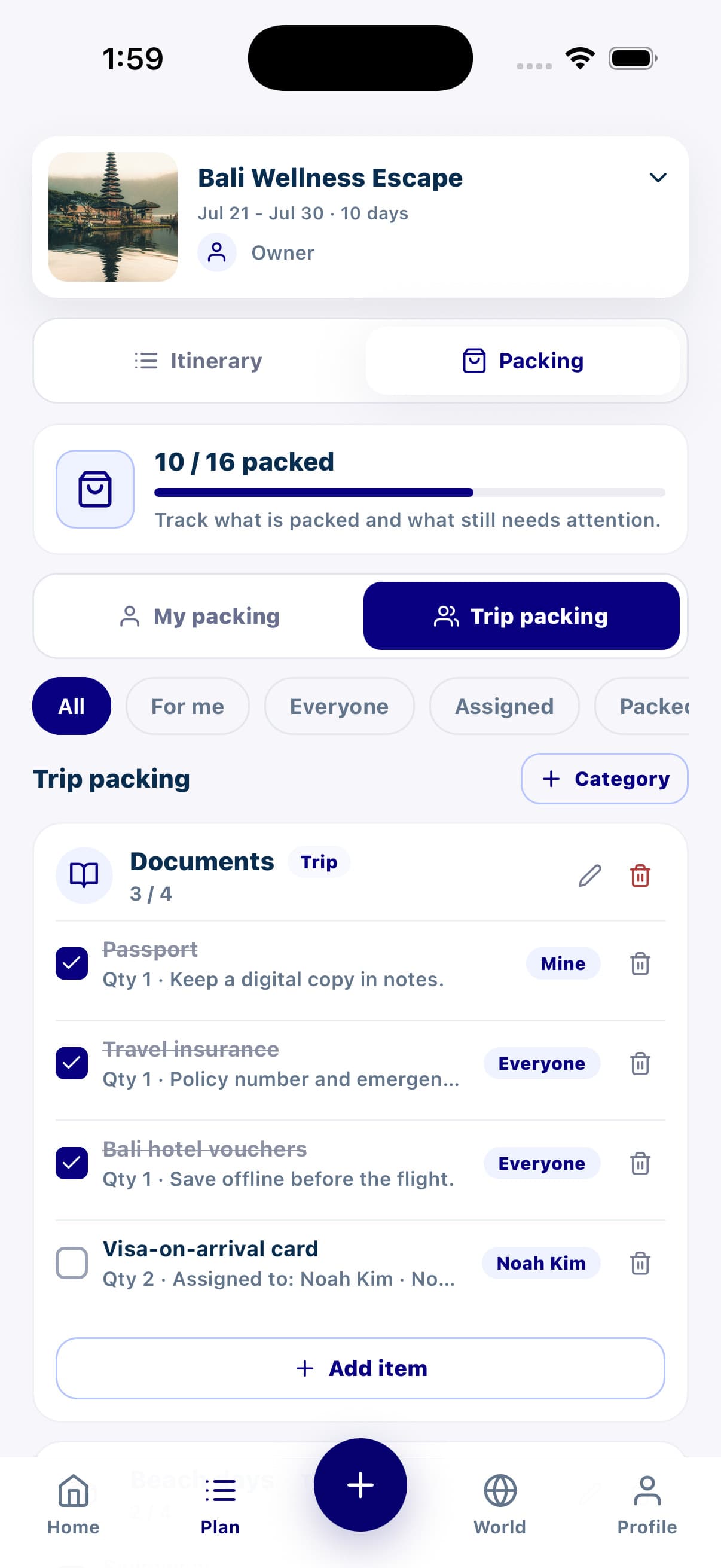
Common questions
How much clothing should a family pack for five days?
Do these quantities include what we wear while traveling?
Does each child need a suitcase?
What should be in the family travel-day bag?
Can I use this list for a baby or toddler?
Sources and useful links
Researched by Oreviyo using the sources below, reviewed on October 31, 2026. The routes, quantities, and packing examples are our suggestions. Confirm current conditions, access, and booking details before you go.
- Family flying and child restraint preparationU.S. Federal Aviation Administration
- International travel preparation for U.S. travelersU.S. Department of State