Anywhere Packing lists
Camping packing list: two nights, two adults
For a first camping weekend, the awkward omissions are often small: the pump that fits the sleeping mat, a light for each person or the tool needed to make dinner. This packing list uses two adults, two nights and a campsite reached by car. It separates personal bags from shared equipment and starts with the facilities and conditions at your booked site.
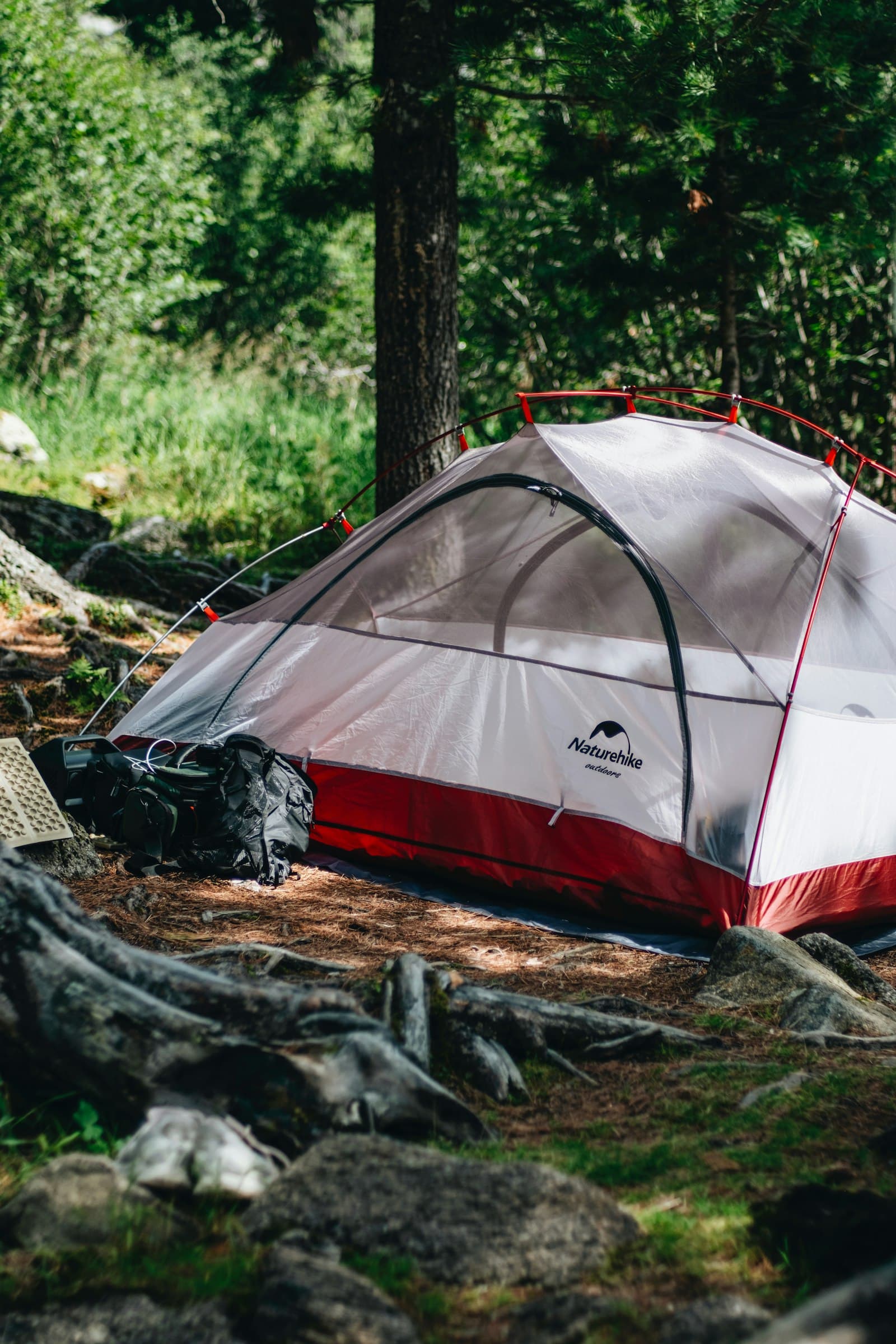
Photo: Dmitrii Shirnin · Unsplash License · Cropped for layout.
- Example trip
- 3 days · 2 nights
- Campers
- 2 adults
- Setting
- Vehicle-accessible tent site
- Bag plan
- Personal kits + assigned shared gear
In this guide
The short version
Pack one shared camp setup and a complete personal kit each
For a two-night, vehicle-accessible tent trip, start with a suitable tent and its complete setup kit, a sleeping bag and mat for each person, personal lights, clothing, water and a meal plan. Add the cooking, food-storage and washing equipment your campsite requires. Confirm weather, drinking water, toilets, access and current fire or stove restrictions before finalizing the list.
Check the campsite before packing its missing facilities
Read the details for the actual site and dates, not just the park’s name. Confirm whether the car can remain beside the pitch or whether you must carry equipment from a parking area. Check the pitch size, arrival instructions, toilets, drinking water and any facilities you expect to use.
The National Park Service’s camping preparation guidance emphasizes matching equipment to the setting and checking local regulations and conditions. Use the land manager’s current notices for your own destination. A campsite listing or old photograph does not establish that water, a shop or a cooking facility will be available when you arrive.
Leave your trip details and expected return with a trusted person, and know how to contact the campsite or local emergency service. Choose an alternative or postpone if conditions no longer suit the group and equipment.
Test the shelter and each sleeping setup at home
Pitch the tent before the trip. Confirm that its poles, pegs, guylines and rainfly are present where applicable, and check the manufacturer’s setup instructions. Make sure the usable interior works for both campers and their planned sleeping equipment.
Swipe or scroll to see all columns.
| Equipment | Example quantity | What to verify |
|---|---|---|
| Tent and complete pitching kit | 1 suitable tent | Capacity, site fit, condition and suitability for the expected weather. |
| Sleeping mats | 2 | One per person; test valves, inflation and the appropriate pump if required. |
| Sleeping bags | 2 | One per person, selected for the expected overnight conditions and individual needs. |
| Pillows or preferred alternatives | 2 | Test comfort with the actual mat and sleeping bag. |
| Ground protection | As specified for the tent | Use the manufacturer’s guidance rather than an improvised oversized sheet. |
| Compatible repair items | 1 small shared kit | Match repairs to the equipment and instructions you know how to use. |
The NPS equipment guide treats shelter, sleeping mats and sleeping bags as distinct parts of the setup. Check overnight conditions separately from the afternoon forecast. A sleeping bag and mat should work together for the person using them; the label “three-season” alone is not a complete decision.
Pack the items needed to pitch first near the car’s opening. Plan to arrive with enough daylight to find the site and set up without rushing. Keep the dry sleeping clothes separate from the day’s damp or dirty clothing.
Count meals before choosing the kitchen
For this example, arrive Friday after lunch and leave Sunday before lunch. That means two dinners, two breakfasts and one lunch at camp: five meals for two adults, or ten meal servings, plus snacks and an appropriate reserve. Change the count if arrival, departure or meals away from camp differ.
Swipe or scroll to see all columns.
| Day | Meals to provide | Packing implication |
|---|---|---|
| Friday | Dinner for 2 | Choose something you can prepare after setup, or a suitable ready-to-eat option. |
| Saturday | Breakfast, lunch and dinner for 2 | Plan each meal’s storage, utensils and preparation before loading. |
| Sunday | Breakfast for 2 | Use a simple meal that leaves time to clean and pack before departure. |
| Throughout | Snacks, drinking water and reserve supplies | Adapt to conditions, activity, dietary needs and dependable resupply. |
Work backward from the meals: if you need a pan, opener, chopping board or serving spoon, add that specific tool. Bring personal cups, plates or bowls and cutlery for both campers. Keep the menu simple enough that you do not need an entire household kitchen.
Check current stove and fire rules with the campsite; permission for one does not imply permission for the other. Follow the equipment instructions and use a suitable permitted outdoor cooking area. The Scouts’ stove guidance says never to use fuel-burning equipment inside tents, tent porches, vehicles or other enclosed spaces, including when cooling down. Have a meal alternative if cooking is restricted.
Store food and scented items exactly as the land manager requires; do not assume a tent, ordinary box or car is acceptable storage. Keep perishable food under suitable temperature control according to food-safety guidance and its storage instructions. Plan drinking, cooking and washing water around a confirmed supply. Unverified natural water is not a ready-to-drink refill point.
Pack one personal bag each for three days
This starting list includes the first day’s worn clothing, assumes no laundry and allows rewearing bottoms. Adjust for weather, activity, your normal change preferences and the possibility of wet clothes. Personal care and accessibility needs belong on each camper’s own list.
Keep toiletries and scented products in the storage arrangement required by the campsite. Check how washing water and waste must be handled; a product labeled biodegradable is not permission to wash directly in a river or lake.
If you plan a hike, make a separate day-activity list using local guidance and the route’s conditions. Camp equipment left at the pitch is not a substitute for what you need while away from it. For the drive, the road trip packing guide covers vehicle and travel-day preparation.
Load for setup, then leave room for the way home
Group the shelter, sleeping equipment, food and personal bags so both campers know where things are. Secure the vehicle load according to its limits and keep visibility and controls clear. Avoid burying the first setup items beneath optional comforts.
At departure, follow the site’s checkout and waste instructions. Keep damp equipment separate for transport, then clean and dry it as its manufacturer directs before storage. Record missing or failed items while you still remember them.
Use the group packing checklist to separate individual responsibilities from shared equipment. The packing list generator can start a personal list; add the campsite-specific equipment, meal plan and local requirements yourself.
From reading to ready
Know what is packed and who is bringing it
Keep personal lists and assigned shared items together in Oreviyo. Add your campsite reservation and arrival notes to the itinerary so everyone can find the plan before leaving.
Explore shared packing lists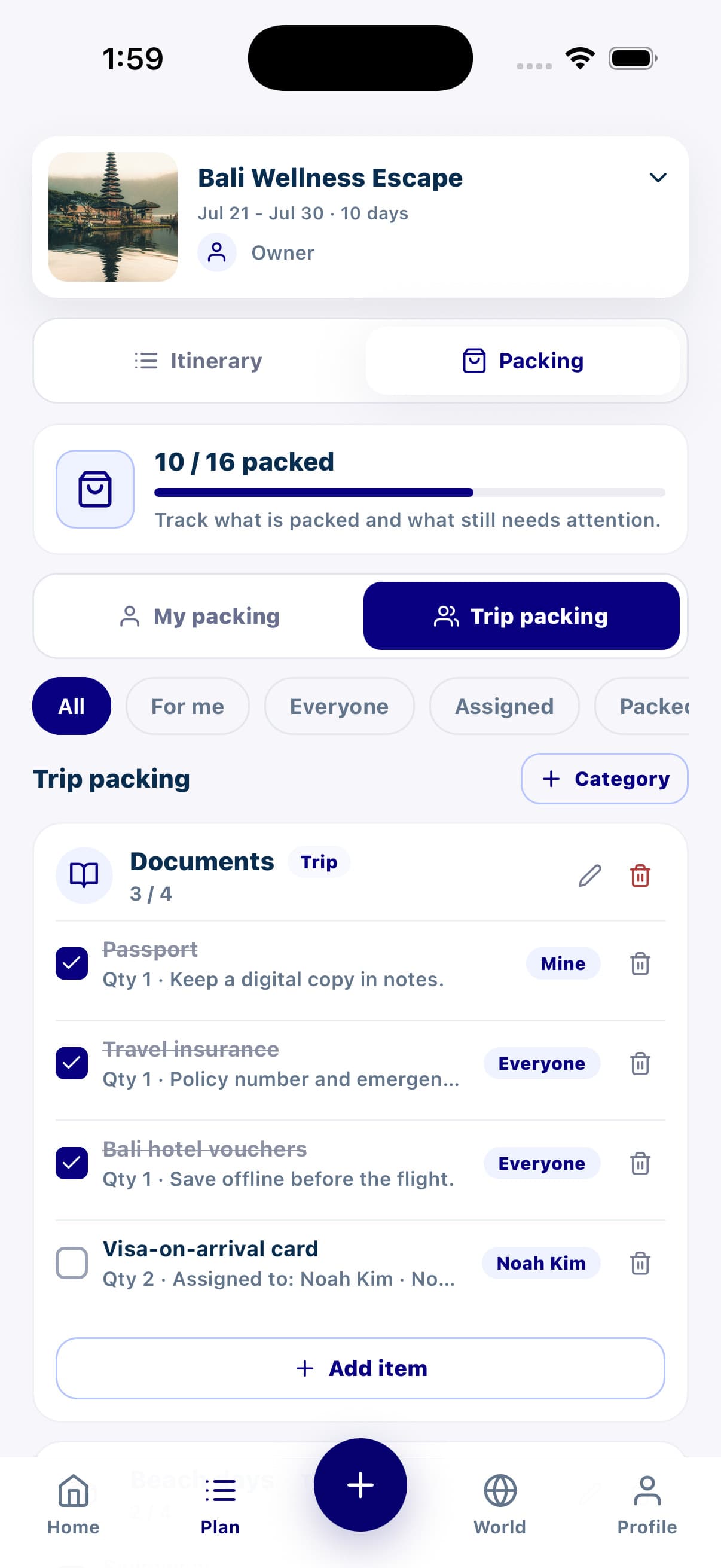
Common questions
What should I pack for two nights of camping?
How much food does this two-night example need?
Can we share all the camping equipment?
Can I use a stove in the tent if it rains?
Does this list work for backpacking or winter camping?
Sources and useful links
Researched by Oreviyo using the sources below, reviewed on November 9, 2026. The routes, quantities, and packing examples are our suggestions. Confirm current conditions, access, and booking details before you go.
- Camping preparation, local rules and equipment testingU.S. National Park Service
- Camping shelter, sleeping equipment, food and personal suppliesU.S. National Park Service
- Camping checklist and equipment categoriesNSW National Parks and Wildlife Service
- Using camping stoves safelyThe Scouts