Anywhere Packing lists
International travel packing list: two weeks, organized
Packing for an international trip starts with the things that let the journey happen: the right documents, access to your bookings and personal essentials you can keep with you. Clothes come next. This checklist uses a two-week city trip with laundry as an example, then shows how to organize one bag or a cabin-and-checked-bag combination without losing track of what matters.
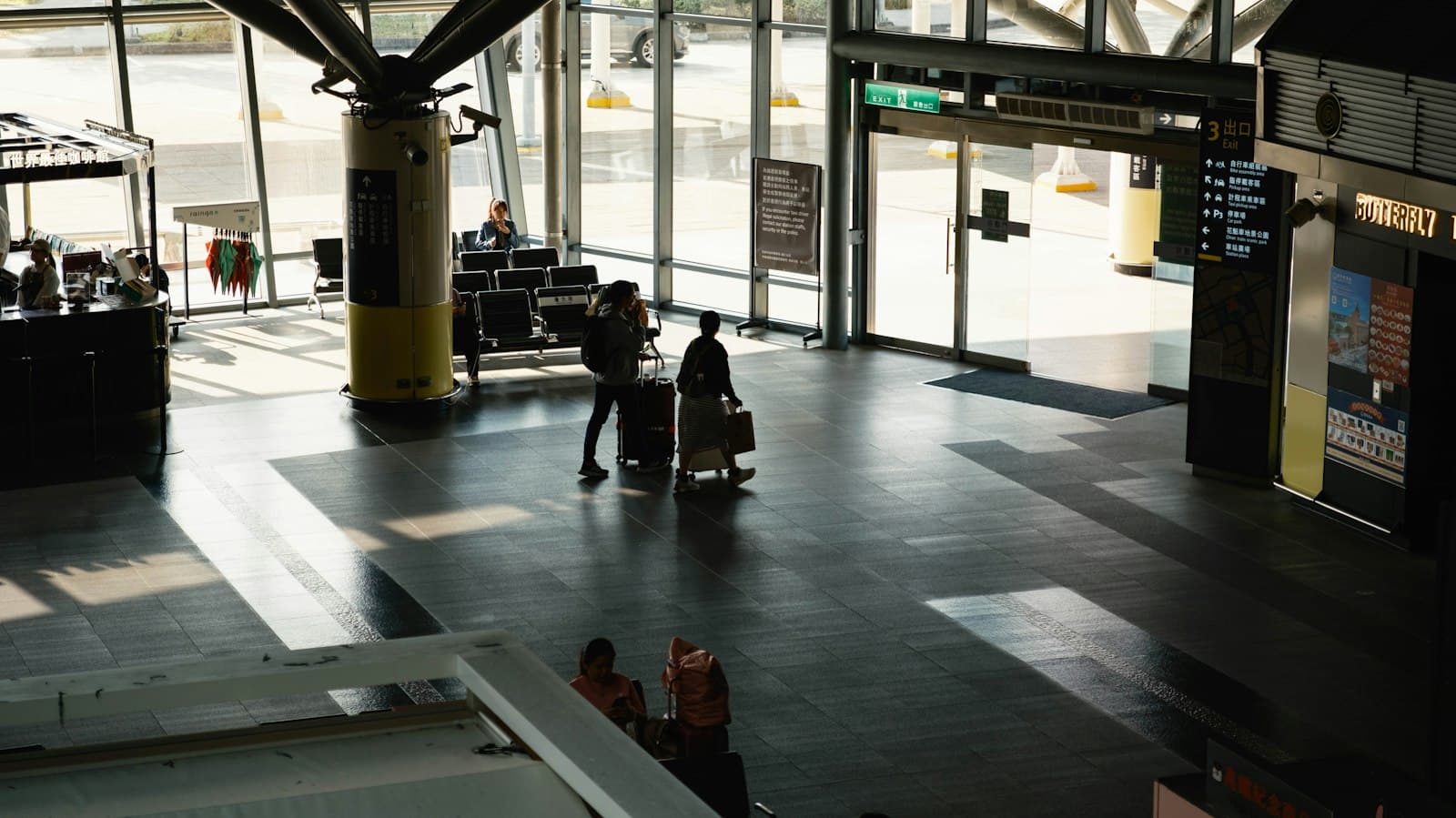
Photo: CK Chen · Unsplash License · Cropped for layout.
- Example trip
- 14 days · city stays
- Clothing plan
- Laundry after days 5 and 10
- Priority
- Documents + accessible essentials
- Bag options
- One bag or checked luggage
In this guide
The short version
Keep journey essentials together; pack clothes around laundry
Keep required travel documents, payment methods, phone, essential care items and the first arrival details personally accessible. For a mild-weather fourteen-day trip with laundry after days 5 and 10, start with a five-day clothing cycle and a small reserve. Check every flight’s baggage allowance, the security rules on your route and destination requirements before deciding where each item goes.
Start with the documents for your actual route
Write down every destination and transit stop, then check requirements using your nationality, travel dates and circumstances. Do this early enough to resolve a missing document. A saved packing checklist cannot tell you whether a passport, visa or transit permission is sufficient for a particular journey.
The U.S. State Department checklist organizes document preparation for U.S. travelers; the UK foreign travel checklist provides a corresponding starting point for British travelers. Use the destination authorities and your own government’s advice for the rules that apply to you. A document copy helps with a contingency but does not replace the original required for travel.
Put the arrival address in a form you can read without mobile data. If an accommodation uses a separate entrance, late check-in code or shuttle meeting point, save that detail too. The first evening is easier when you can find the door without searching an inbox.
Give each bag a clear job
Divide the packing list by access rather than by how neatly everything fits. The items you need at a border, during a delay or immediately after landing belong together. Your personally accessible kit should remain useful if a larger bag is delayed or has to travel separately.
Swipe or scroll to see all columns.
| Zone | What belongs here | Check before leaving |
|---|---|---|
| Personally accessible kit | Documents, phone, payment, essential personal care, glasses and arrival details | Can you remove it quickly if the larger bag is taken at the gate? |
| Main clothing bag | Repeatable outfits, sleepwear, laundry bag and permitted toiletries | Does its packed size, weight and item count match every flight? |
| Optional checked bag | Clothing overflow and items permitted only in the hold | Review restricted items; keep cabin-only items out of it. |
| Departure-morning list | Things still in use: charger, toothbrush, personal medicines, glasses | Check these off when they actually enter the correct bag. |
If your fare permits only one cabin item, the essentials pouch must fit inside it when required. A separate handbag or laptop bag is not automatically included. Check the operating carrier on connecting flights, not just the airline name at the top of your confirmation.
Pack a clothing cycle for two weeks
For this example, laundry happens after day 5 and again after day 10. Choose clothes you can comfortably rewear, and check that each wash can be finished and dried before you move on. A sink and a short overnight stay are not the same thing as dependable laundry.
Swipe or scroll to see all columns.
| Item | Starting quantity | How to adapt |
|---|---|---|
| Tops | 6 total: wear 1, pack 5 | Five daily choices and one reserve; add for activities requiring fresh clothes. |
| Bottoms | 3 total: wear 1, pack 2 | Choose combinations you can rewear comfortably. |
| Underwear | 6 sets total: wear 1, pack 5 | Wash after day 5; include your usual bras if worn. |
| Socks | 6 pairs total if worn daily | Adjust for footwear, activity and drying time. |
| Sleepwear | 1 set | Change the plan if you prefer fresh sets more often. |
| Layers | 1 mid-layer and suitable outer protection | Match the actual forecasts for every stop. |
| Shoes | 1 comfortable main pair | Add another pair only for a planned use or personal need. |
Without laundry, increase clean essentials for the full fourteen days and review tops against your activity and change preferences. Do not keep the smaller quantities while assuming laundry will somehow work out. For a seven-day cabin example and a fuller bag test, use the carry-on packing list.
Make a separate adjustment for a formal event, swimming or a demanding outdoor activity. Choose the outfit or equipment for the booked activity, then remove redundant alternatives. A city wardrobe does not cover a mountain excursion just because both happen during the same holiday.
Make personal care easy to reach and easy to check
List the care items you use in a normal day, including glasses, contact-lens supplies and any accessibility equipment you depend on. Pack your own necessary supplies even when traveling with someone else. Shared shampoo can have one owner; individual prescriptions cannot be delegated that way.
Before carrying medicines abroad, check destination and transit restrictions and any documentation needed with the relevant authorities. The State Department checklist highlights labeled medicines and prescription copies for U.S. travelers. Arrange questions about your own supply with the appropriate clinician or pharmacist well before departure.
Make a small wash kit from the products you actually use and the quantities the journey needs. Check the current screening requirements at departure, transfer and return airports, including how exceptions are handled. Security permission and an airline’s baggage allowance are separate checks.
Close bottles securely and give leak-prone items a separate pouch. Leave enough room to put things back after screening. The morning list should include anything still on the bathroom shelf, rather than marking the entire wash kit ready the night before.
Keep charging and offline access simple
Bring the devices you expect to use, their compatible cables and a suitable charger. Check socket compatibility for each destination and the input ratings on your equipment. Electrical Safety First explains that a travel adaptor does not convert voltage or frequency; follow the device and adaptor instructions rather than relying on the word “universal.”
If taking a power bank or spare lithium batteries, use IATA’s battery guidance and confirm the actual airline’s current rules. Spare lithium batteries and power banks belong in hand baggage, protected against short circuits. If your cabin bag is taken for the hold, remove those items and follow staff instructions for your other devices. Check capacity, quantity, storage and use conditions before flying.
Confirm roaming or another data arrangement with your provider. Test the offline information while you still have time to fix it. A screenshot may be useful for an address; a ticket that needs an app, activation or an original barcode needs the operator’s own instructions.
Finish with one review of the whole journey
Lay out the packed bags and walk through departure, transfer, border checks and the first accommodation. Make sure the necessary item is accessible at each stage. Then measure and weigh the finished bags, including the things added on departure morning.
Repeat the review for the return leg. Shopping, a wet swim kit or an extra airport bag can change the allowance calculation. Keep room to repack and check any import restrictions before buying food, plants or other regulated goods abroad.
Use the free packing list generator for a starting list, then add the documents and route checks specific to your journey. The before-you-leave checklist covers the wider preparation timeline; the group checklist helps assign shared supplies.
After the trip, note which clothes stayed unused and which essential was awkward to find. Those two observations are a useful starting point for the next list: less duplication and better access, with the personal essentials kept intact.
From reading to ready
Build a packing list around your real journey
Keep your personal packing checklist in Oreviyo and add your itinerary and reservation notes to the trip. For shared supplies, assign who brings each item before departure.
Explore packing lists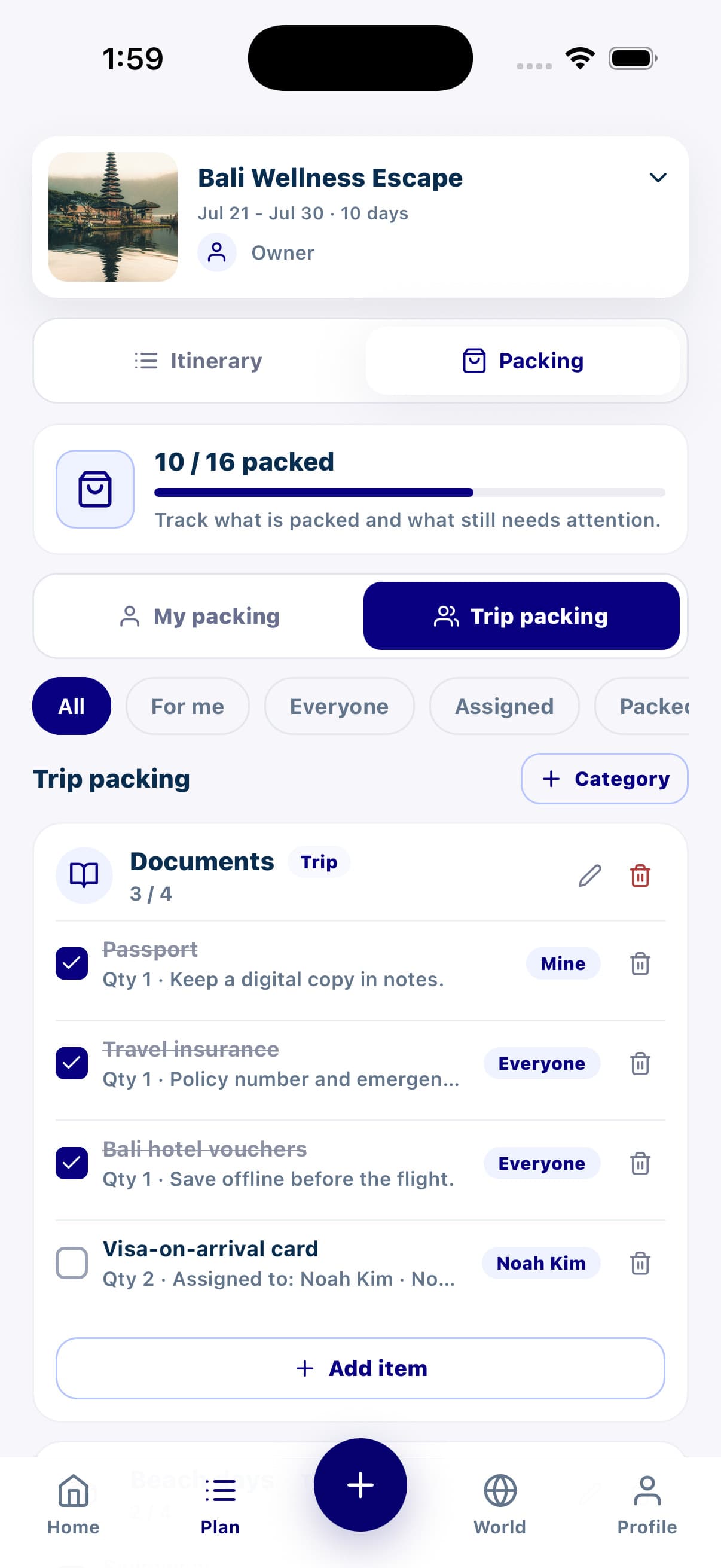
Common questions
What should I pack for international travel?
Can I travel internationally with one bag for two weeks?
Does the clothing table include what I wear on the plane?
What should I keep out of my checked bag?
Do I need the same documents as another traveler on my booking?
Sources and useful links
Researched by Oreviyo using the sources below, reviewed on November 9, 2026. The routes, quantities, and packing examples are our suggestions. Confirm current conditions, access, and booking details before you go.
- International travel checklist for U.S. travelersU.S. Department of State
- Foreign travel checklist for British travelersUK Foreign, Commonwealth & Development Office
- Safe travel with lithium batteriesInternational Air Transport Association
- Travel adaptor compatibility and safetyElectrical Safety First