Anywhere Packing lists
Winter packing list: five days without the extra bulk
Winter packing works best when the clothes work together. A coat that is comfortable over a T-shirt may not fit over your warmest sweater, and a second pair of boots can take up half a small bag. This guide builds a five-day city-break wardrobe, with warm indoor stops, no laundry and deliberate changes for wet, windy or snowy weather.

Photo: LEDC · Unsplash License · Cropped for layout.
- Example trip
- Five days; four city nights
- Travelers
- One adult; no laundry
- Clothing counts
- Includes the travel outfit
- Scope
- City sightseeing
In this guide
The short version
Build complete outfits around one everyday outer layer
For five days and four nights, start with five next-to-skin tops, two warm mid-layers, two bottoms, five sets of underwear and socks, sleepwear, suitable outerwear and comfortable weather-appropriate footwear. Count what you wear in transit. Add a hat, gloves and neck covering when the forecast calls for them, then test the whole outfit together.
Pack for the conditions and time outdoors
Look at the forecast for every stop, including early departures and evenings outside. Consider rain, wind, snow and how much of the day will be spent walking, waiting or indoors. “Winter in Europe” is too broad to choose an outfit; a wet city visit and a mountain stay need different preparation.
Swipe or scroll to see all columns.
| Question | What it changes |
|---|---|
| Will the day be mostly indoors or outside? | Choose layers you can adjust for heated transport, museums and longer outdoor periods. |
| Is rain, wind or snow expected? | Match the outer layer and footwear to the forecast, and plan where damp items can dry. |
| Does the plan include specialist activities? | Add a separate checklist for skiing, mountain walking or other activities and confirm equipment requirements with the provider. |
Check local weather alerts again before going out. The National Weather Service’s cold-weather guidance emphasizes layers, protecting exposed skin and changing out of wet clothes. Severe conditions may require changing the plan or staying indoors; a packing list cannot make every outing suitable.
Try the layers together before they go in the bag
Choose one outfit for your longest planned outdoor period, then check that you can comfortably wear it, move in it and carry your day bag. You should also be able to remove an outer layer for indoor stops without needing a completely different outfit.
Swipe or scroll to see all columns.
| Part | Purpose | Packing check |
|---|---|---|
| Next-to-skin clothing | A comfortable base you can change each day | Choose pieces you have already worn and can layer without bunching. |
| Mid-layer | Extra warmth when needed | Try the sweater or fleece under the outerwear; avoid bringing several pieces that do the same job. |
| Outerwear | Protection suited to the actual weather | Check room for the layers underneath and whether it suits expected wind and wet conditions. |
| Small accessories | Coverage for head, hands and neck as needed | Check fit, comfort and whether gloves let you handle the things you need. |
The NWS guide to dressing for the cold illustrates how clothing needs change with conditions. Use it as context alongside local forecasts; this wardrobe example does not assign a temperature rating to your coat or promise a fixed number of layers will be enough.
For a casual dinner, one of the same mid-layers can work over a clean top. Add a separate formal outfit only if you have a booking that requires it. Coordinating around the shoes and outerwear you actually wear is more useful than packing unrelated outfits.
A five-day winter clothing checklist
These quantities assume a clean next-to-skin top, underwear and socks each day, rewearing of bottoms and mid-layers, and no wash during the trip. Adjust for personal needs, comfort and activities. If you use thermal leggings or other additional base pieces, count them separately.
For a two-night trip, start with our weekend quantities and make the same weather adjustments. For longer stays, confirm laundry access and drying time before reducing clean essentials.
Choose shoes first, then check the packed bag
Wear the intended shoes with the socks and clothes you will use. Check comfort on a normal walk before the trip. Look at expected surfaces and the footwear’s suitability; everyday fashion boots are not automatically appropriate for ice, deep snow or a specialist activity.
One versatile pair may cover a city break. A second pair is useful when it solves a real need, such as a specific activity or an indoor alternative. If you bring it, choose a place in the bag before adding duplicate sweaters. Keep dirty soles away from clean clothes.
Check luggage size, weight and bag-count rules for your actual fare and every operating carrier. Wearing bulky clothing in transit can free space, but it does not change a carrier’s rules. Make sure there is a practical place for the coat when you take it off.
Use small organizers for gloves, socks and charging cables if you already find them helpful. Compression can reduce volume, but it does not remove weight. Our carry-on guide explains how to check the completed bag and plan a clothing rotation.
Make the day bag work between outdoor and indoor stops
Check the bag policy for museums, events and other booked stops. Keep the everyday bag small enough to carry comfortably, with room to put accessories away instead of leaving them on a café table. Before leaving each stop, do the same quick check: phone, wallet, gloves and hat.
At the accommodation, separate damp items and follow their care instructions when drying them. Check what is ready for the next morning before packing everything away. Personal toiletries should suit your usual routine; winter does not require buying a new set of products for the trip.
Run through the coldest planned day
Picture the morning transfer, the longest outdoor stop, an indoor lunch and the return after dark. Check which clothes you will wear, where removed layers will go and how you will change the plan if conditions deteriorate.
Use the packing list generator for a starting list with cooler-weather and activity choices, then review the result yourself. The before-you-travel checklist covers the documents and booking tasks beyond the bag.
From reading to ready
Pack around the days you have planned
Keep your daily itinerary and packing lists together in Oreviyo. Organize personal items by category and assign shared supplies to a travel companion when you are going together.
Explore packing lists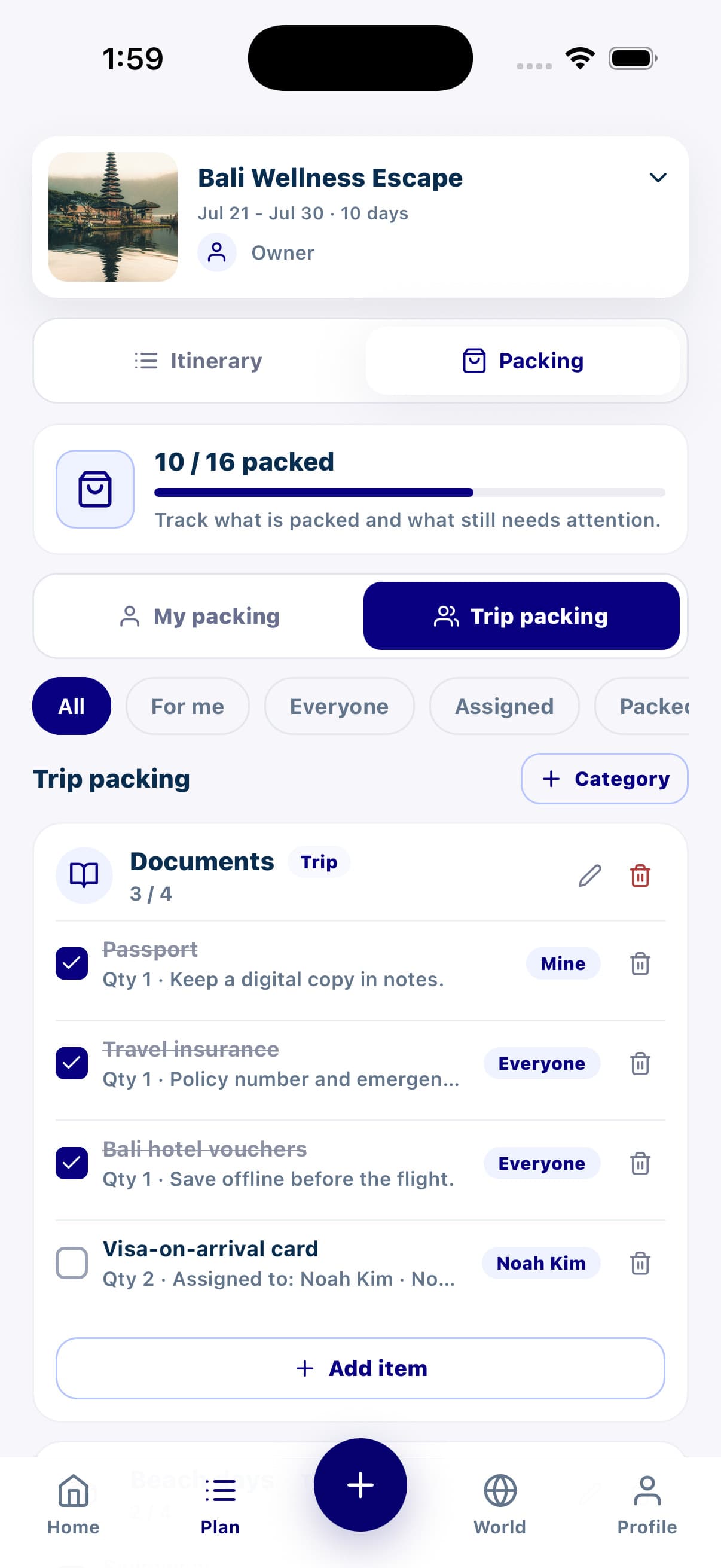
Common questions
What should I pack for five days in winter?
Can I travel with a carry-on in winter?
Do I need two coats?
Does this list cover skiing or extreme cold?
What if I travel between warm and cold destinations?
Sources and useful links
Researched by Oreviyo using the sources below, reviewed on October 21, 2026. The routes, quantities, and packing examples are our suggestions. Confirm current conditions, access, and booking details before you go.
- Cold-weather preparation and precautionsU.S. National Weather Service
- Dressing for the coldU.S. National Weather Service